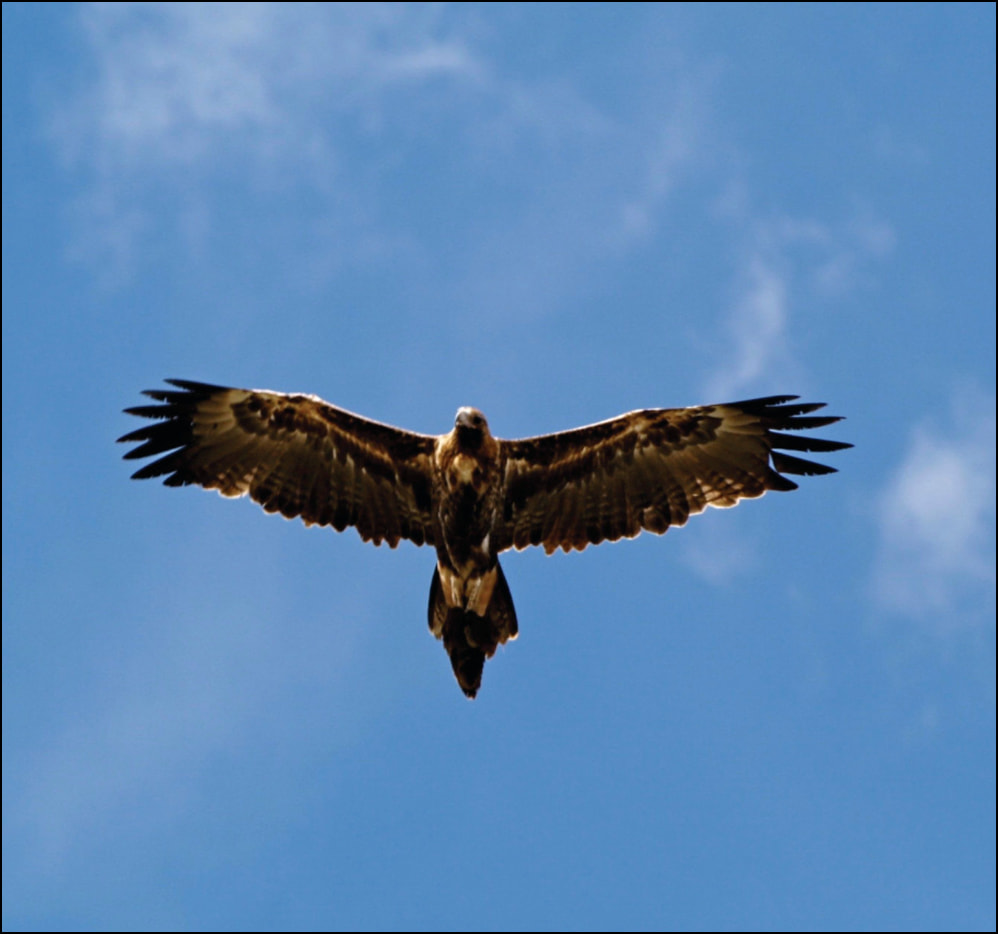
Photo: Paul Hitch. Courtesy: Parks Victoria
DEECA’s drone pilots might get a bird’s eye view of their project but sometimes it’s an aerial apex predator that has the drone in their sights.
Aviation Services Unit (ASU) Manager Alina Hamblyn said DEECA drone pilots were more likely to meet a Wedge Tail Eagle in the air than an aircraft.
“There’s not a lot of air space congestion generally where we work, except around Port Phillip Bay, where pilots will have the highest chance of interacting with other aircraft,” she said.
“Wedge Tail Eagles are large and very territorial.
“They see the drone as an intruder and can take one out.
“Part of DEECA’s induction training covers how to avoid or deal with those situations.”
After rigorous training by a CASA approved training company, DEECA’s drone pilots go through the ASU’s Remotely Piloted Aircraft System (RPAS) team for induction, flight planning, operations and approvals.
The new team looks after all department drone flight and licence approvals, compliance, governance and safety.
68 drone pilots across the department have been inducted by the RPAS Team and more than 320 flights have taken place so far.
Projects have included coastal monitoring, habitat assessment, compliance and enforcement, roading, forest health and agricultural research.
Page last updated: 30/03/26