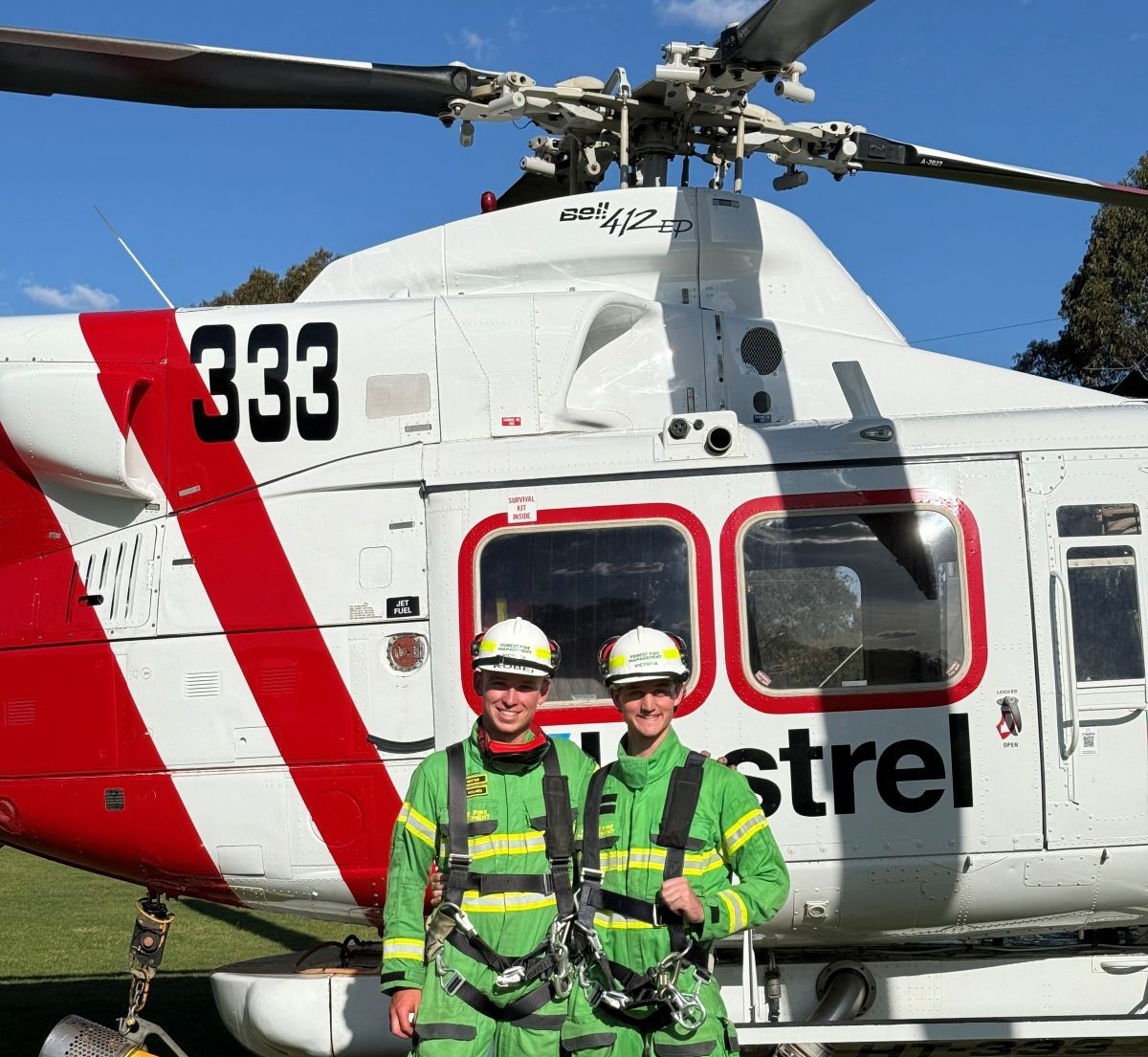
It was his first time flying in a helicopter, and his first time rappelling from one.
Kobei, who grew up on the Mornington Peninsula, began his career as a seasonal firefighter with the Alexandra crew, completing two fire seasons from 2023 before earning a place on the rappel program at Ovens.
“Like a lot of kids, growing up I always wanted to be a firefighter,” Kobei said.
“I got to work with the rappel team a few times while I was at Alexandra, and it quickly became a goal of mine to join the program.”
“Once I saw the rappelers in action, I knew it was something I wanted to do,” he said.
Rappel recruits complete four weeks of intensive specialist training, starting at the rappel tower at the Fire Equipment Development Centre in Altona.
Before advancing to helicopter‑based exercises, they must prove their competence in rappelling techniques and emergency response scenarios.
“The training was pretty intense to begin with,” Kobei said.
“There’s a lot to learn, and at the same time you are meeting new people and coming together as a team.”
The moment of truth
Kobei’s first rappel into an active fire occurred on December 31, 2025, New Year’s Eve, when his crew was dispatched to a small fire in the Mt Buffalo National Park.
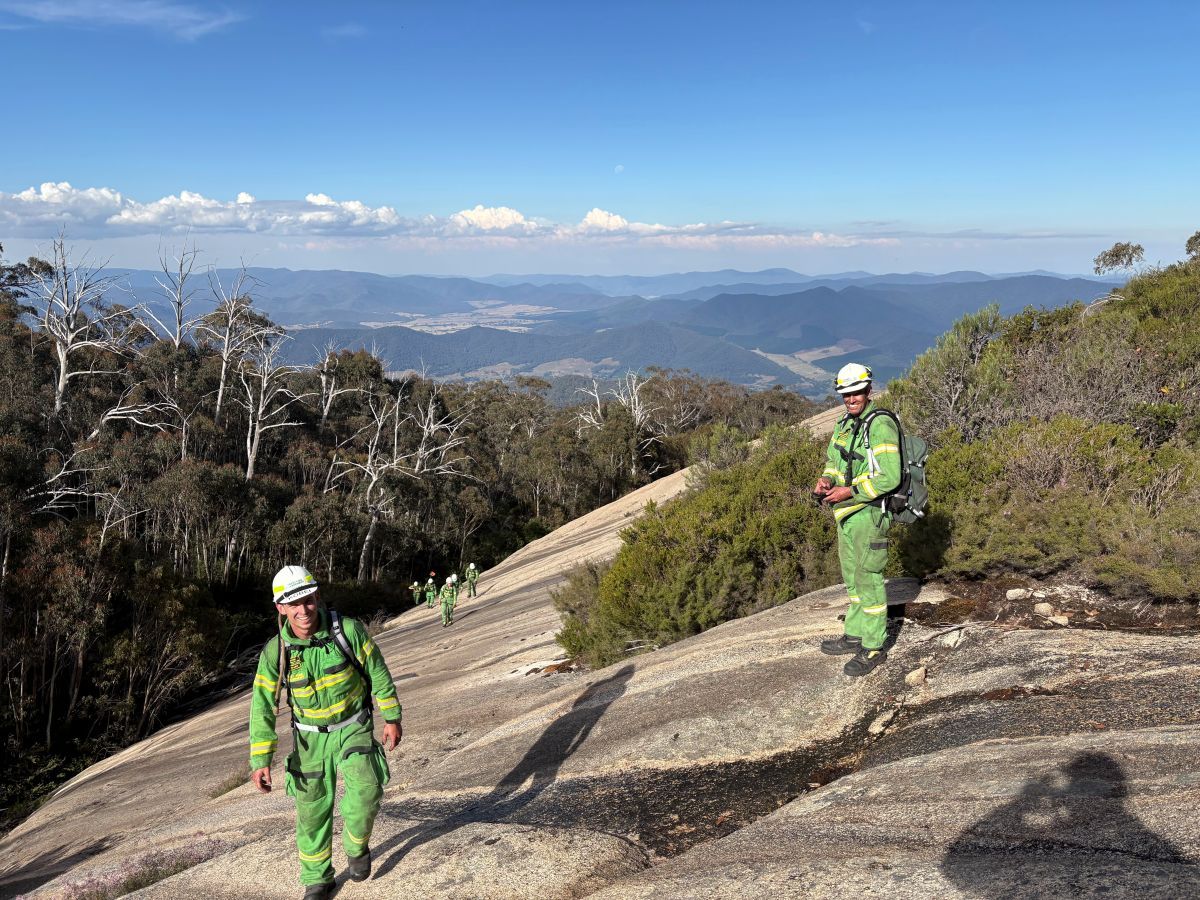
Mt Buffalo is known for its sheer cliffs and granite tors, which make accessing new fires a considerable challenge for firefighters.
“It was probably a good first fire being so close to the depot. It was literally a five-minute flight,” Kobei said.
“The objective is always to respond quickly and safely into the fire, and keep it small, before on-ground resources can gain access.”
“The adrenaline was certainly pumping, but at the same time I felt prepared.”
“In the moment you just fall back on the all the training, and trust the process and your crew,” he said.
Supported by the large Sikorsky S-61 helicopter which dropped loads of water on the fire via its long-line bucket, the rappel crew managed to contain the fire to just 0.18 hectares.
After “blacking out”, the crew hiked out of the fire to the nearest pick-up point, making it back to the depot at 10pm.
“By the time we got back, no one felt like celebrating the new year, we were all too exhausted,” Kobei said.
It was the start of a busy season which saw the state’s rappel crews fly 56 missions into 22 fires, operating from the Ovens and Heyfield airbases.
“As a rookie, I learned so much from the trainers and the more experienced people on the crew,” Kobei said.
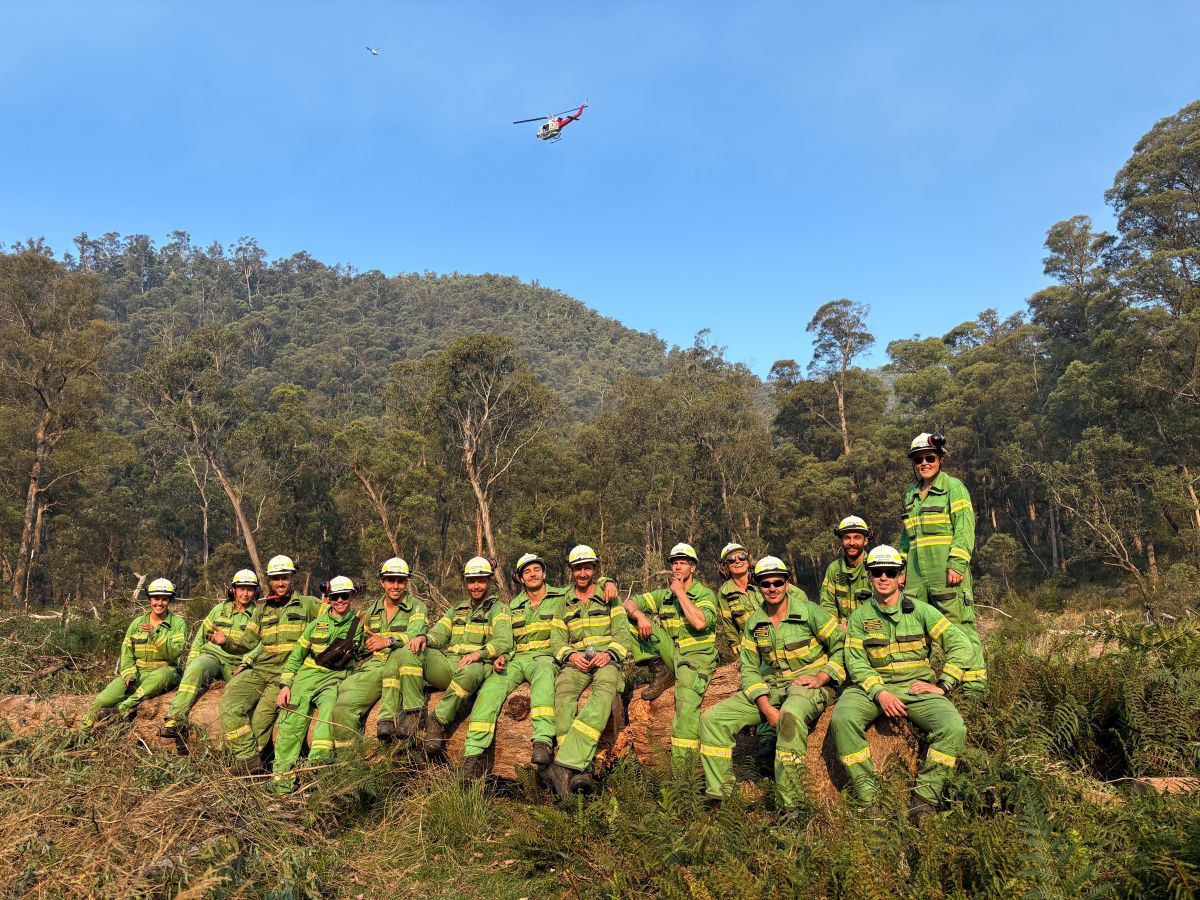
“You spend so much time with your crew that you get really close. You are with each other all season, every day, all day, which is great.”
“Being a team player and looking out for each other is a critical part of the role to ensure that everyone is safe.”
New adventure beckons
As one fire season finished, another was just starting, albeit some 13,500 kilometres away.
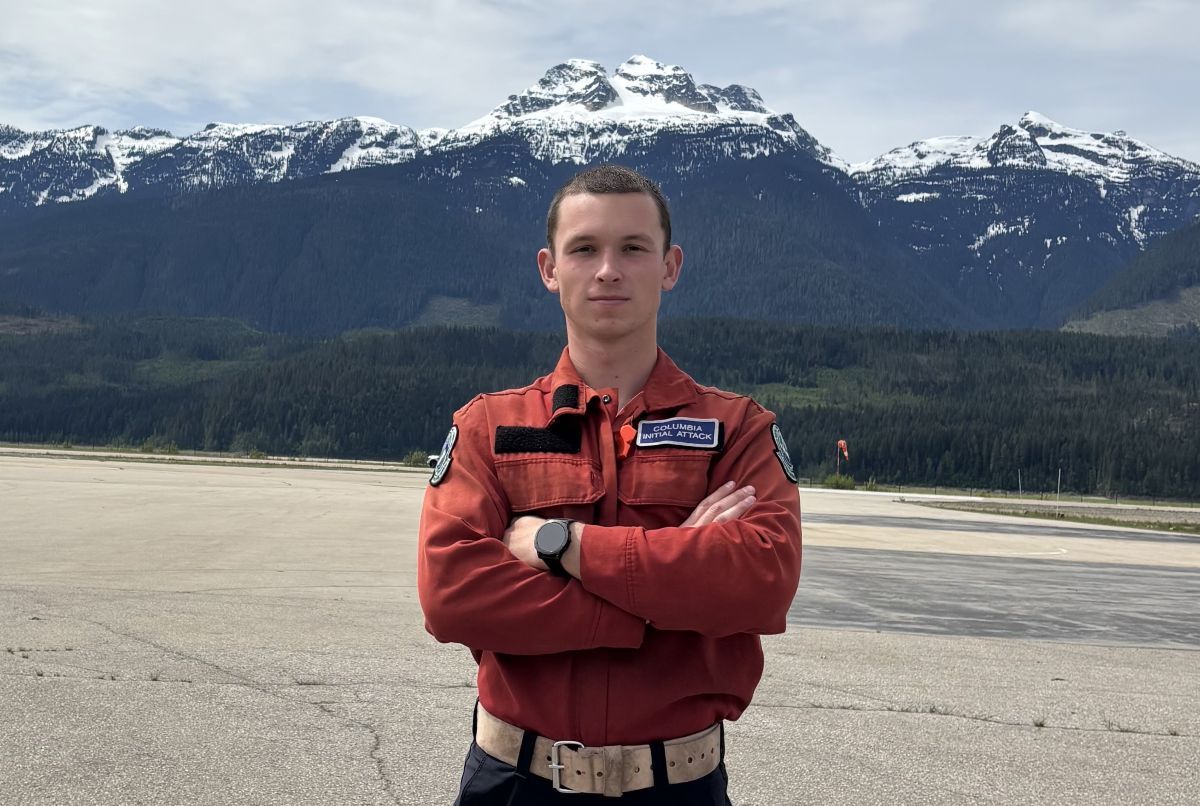
After wrapping up his first rappel season, Kobei applied to the British Columbia Wildfire Service and after completing bootcamp, was offered a position on the Columbia Initial Attack crew based out of Revelstoke.
While it’s unlikely that he will be rappelling from helicopters, there are a lot of similarities between the two firefighting agencies.
Initial Attack Crews are often flown into new remote fires by helicopters with the aim of “hitting them hard and fast” to contain their spread.
Revelstoke township is located at the base of the majestic and wild Mount Revelstoke National Park and has a population of about 8,200 people.
He is among a growing number of FFMVic firefighters who are seeking seasonal opportunities in Canada during the off-season.
Kobei was recently offered a five-year seasonal firefighter rappel contract and plans to return to Ovens later this year to commence his second season on the crew.
“I loved my first season at Ovens, so I can’t wait to return after I complete my summer here in BC,” he said.
FFMVic Rappel Program
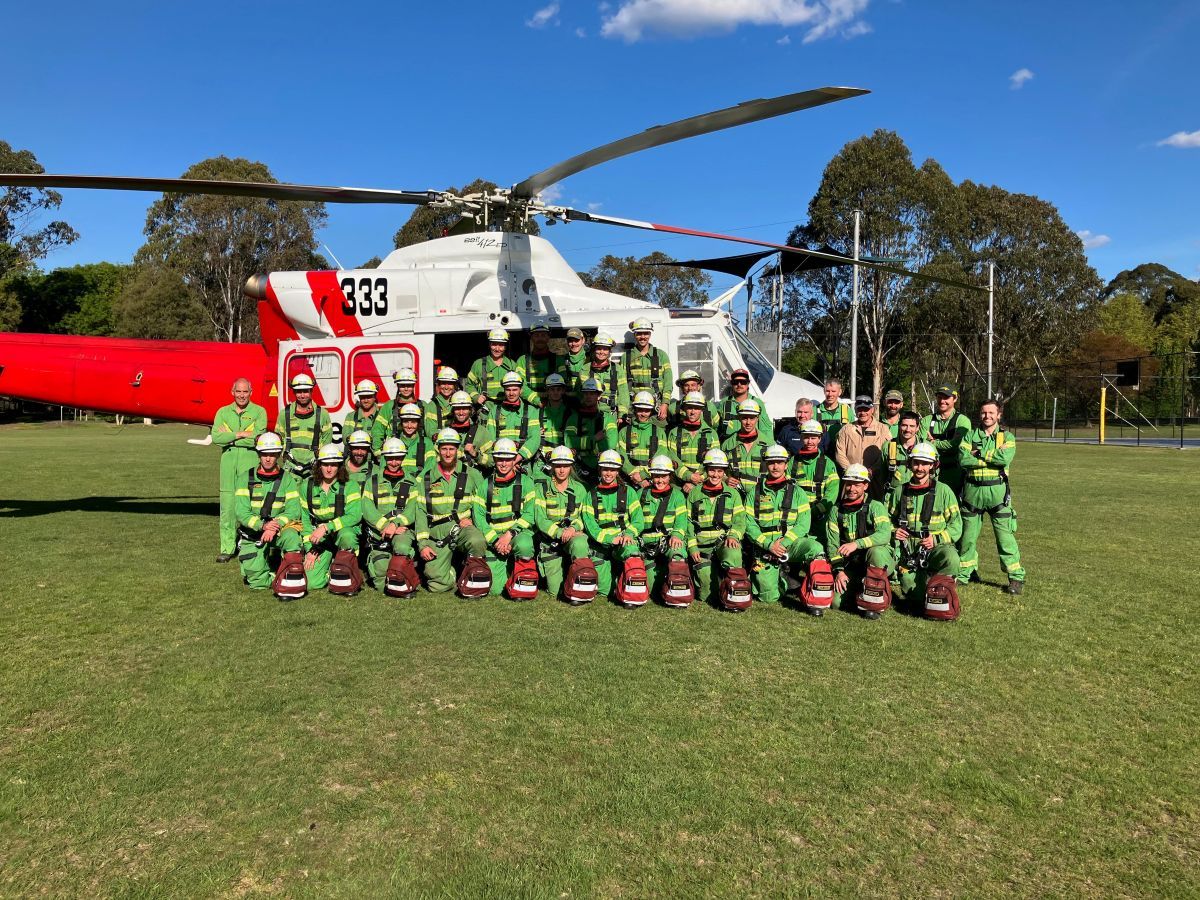
Since 1985, FFMVic’s helicopter rappel crews have played a critical role in Victoria’s bushfire response operating from Heyfield and Ovens.
FFMVic has 32 specialist firefighters across the state who rappel – or abseil – from a helicopter to control fires in remote areas.
They are responsible for aggressive initial attack on new fires, generally caused by lightning, to keep fires small and reduce the risk posed to firefighters, communities, and the environment.
When not deployed to fires, rappel teams help deliver FFMVic’s planned burning program, including hazardous tree assessment and treatment, and track clearing.
Join Us for the 2026/27 season
Forest Fire Management Victoria is recruiting ongoing and seasonal forest firefighter roles for the 2026/27 season from 2-26 July 2026.
Visit seasonal firefighting.
Page last updated: 13/07/26