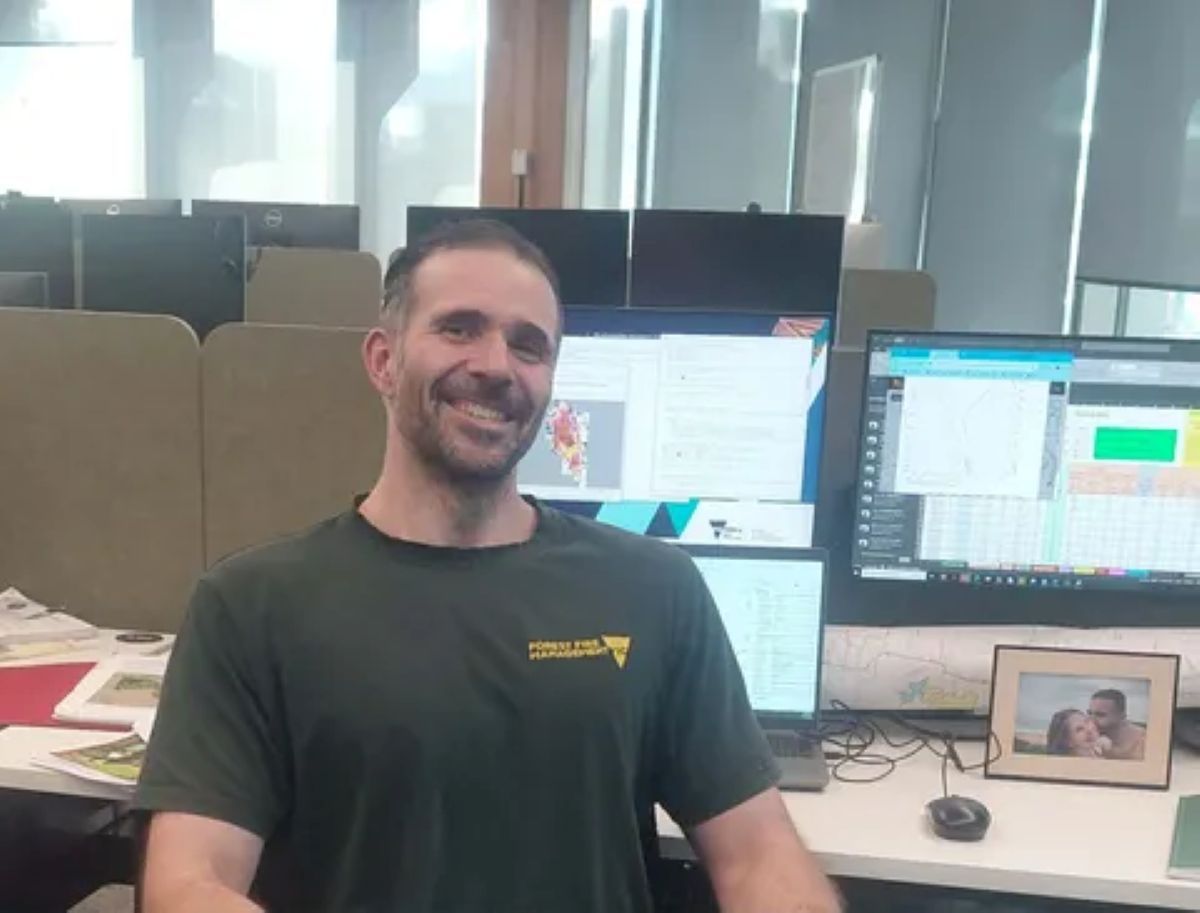
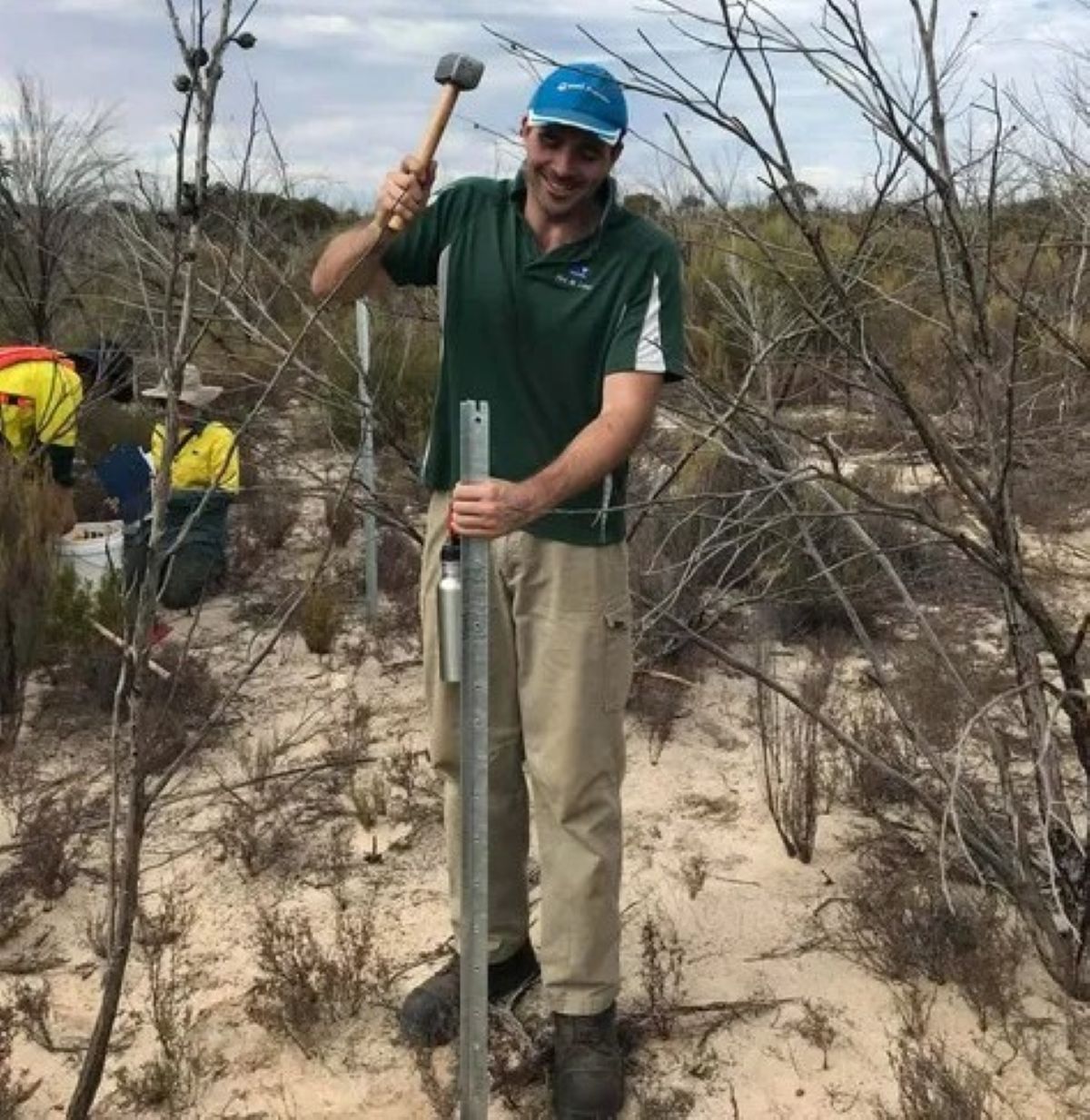
Phil's career hasn't followed the traditional path into firefighting. He started in environmental science, studying coral reef ecology, before discovering a passion for bushfire science.
Today, he helps predict how fires are likely to behave, providing critical information that helps protect firefighters, communities and the environment.
Turning science into action
Most people picture firefighters on trucks battling flames. But behind every major bushfire response is a team of specialists analysing weather, fuels, terrain and fire behaviour to help make important decisions.
That's where Phil comes in.
When large bushfires occur, Phil works as a Fire Behaviour Analyst (FBAN), one of the science-focused roles in fire management.
During an incident, he studies weather forecasts, fuel conditions, landscapes and fire behaviour to predict where a fire is likely to spread next. Those predictions help guide evacuations, warnings, firefighting strategies and resource deployment.
Looking back to help prepare for the future
One project that highlights the value of science was the Taradale bushfire.
The Taradale bushfire started on 9 January 2026 during a day of extreme fire danger across Victoria. While several large bushfires burned across the state, the Taradale fire was contained at less than one hectare.
Phil wanted to understand why.
Using bushfire modelling, he examined how the fire interacted with two previous planned burns and explored what might have happened if firefighters hadn't been able to stop it so quickly.
The modelling showed the planned burns had played an important role by reducing available fuel, slowing the fire and creating better opportunities for suppression.
"It gave us the chance to look at what may have been prevented," Phil said.
There's more to bushfire science than you might think
Predicting bushfire behaviour isn't as simple as checking the weather forecast.
Phil's work combines information about wind, temperature, humidity, vegetation, slopes, drought conditions and even the type of trees growing in an area.
All of these factors influence how quickly a fire spreads and how intense it becomes.
One surprising finding from the Taradale study was that a planned burn completed in 2008 was still reducing fire behaviour nearly two decades later.
"It reinforced the importance of testing our assumptions with data," Phil said.
"The study also reminded us that fuel age alone doesn't tell the whole story. Species, drought, fuel structure and how vegetation is arranged can all influence fire behaviour."
Always learning
Bushfire science is constantly evolving, which is why ongoing training is so important.
Phil recently completed Fire Behaviour Specialist training alongside specialists from across Victoria. The program combined the latest fire science, realistic incident simulations, leadership development and emerging technologies.
"The training strengthens our ability to translate science into practical advice during emergencies," he said.
"It helps incident controllers make informed decisions when every minute counts."
A career many people never consider
Phil believes one of the biggest misconceptions about bushfire management is that every job involves fighting fires on the frontline.
In reality, the sector relies on experts from many different scientific fields, including ecology, meteorology, geography, mathematics, computer science and data analytics.
"As a coral reef ecologist turned firefighter, risk analyst and Fire Behaviour Specialist, I've learnt that bushfire management is a deeply scientific profession," he said.
"If you're curious and enjoy solving complex problems that make a real difference to communities and the environment, there are incredible opportunities in this field."
Science that saves lives
For Phil, the most rewarding part of the job is knowing his work can help keep people safe.
During the 2019 Queensland bushfires, his fire behaviour analysis identified dangerous conditions that led to 21 firefighters being moved out of harm's way before the fire intensified.
"The fire behaved exactly as we predicted," Phil said. "Knowing that our work helped those firefighters get home safely is something I'll never forget."
It's a powerful reminder that behind every bushfire prediction is a simple goal: helping people get home safely.
Page last updated: 28/08/26